
WELCOME BONUS 300%
UP TO €2000 + 100
FREE SPINS
UP TO €2000 + 100
FREE SPINS
Home → Blackjack
Blackjack at Neospin Casino: Variants, Rules and Payouts
Bet two percent of bankroll per hand
For optimal risk management, it is advisable to bet no more than two percent of your total bankroll on any given hand. This strategy is particularly relevant when playing Blackjack Liberal Vegas Strip, which boasts an RTP of 99.72% and a house edge of 0.28% under favorable rules.
Adhering to this two percent guideline, for instance, on a €1,000 bankroll translates to a maximum bet of €20 per hand. This approach helps to preserve capital over extended play sessions, especially when encountering variance inherent in games like Blackjack Insurance, with its significantly higher house edge of 7.47%.
Maintaining this discipline ensures you can withstand losing streaks and maximize playing time. The consequence of deviating from this betting strategy can be a rapid depletion of funds, particularly on tables with less favorable payouts like Blackjack with a 6:5 payout, which increases the house edge by 1.39 percentage points compared to a standard 3:2 payout.
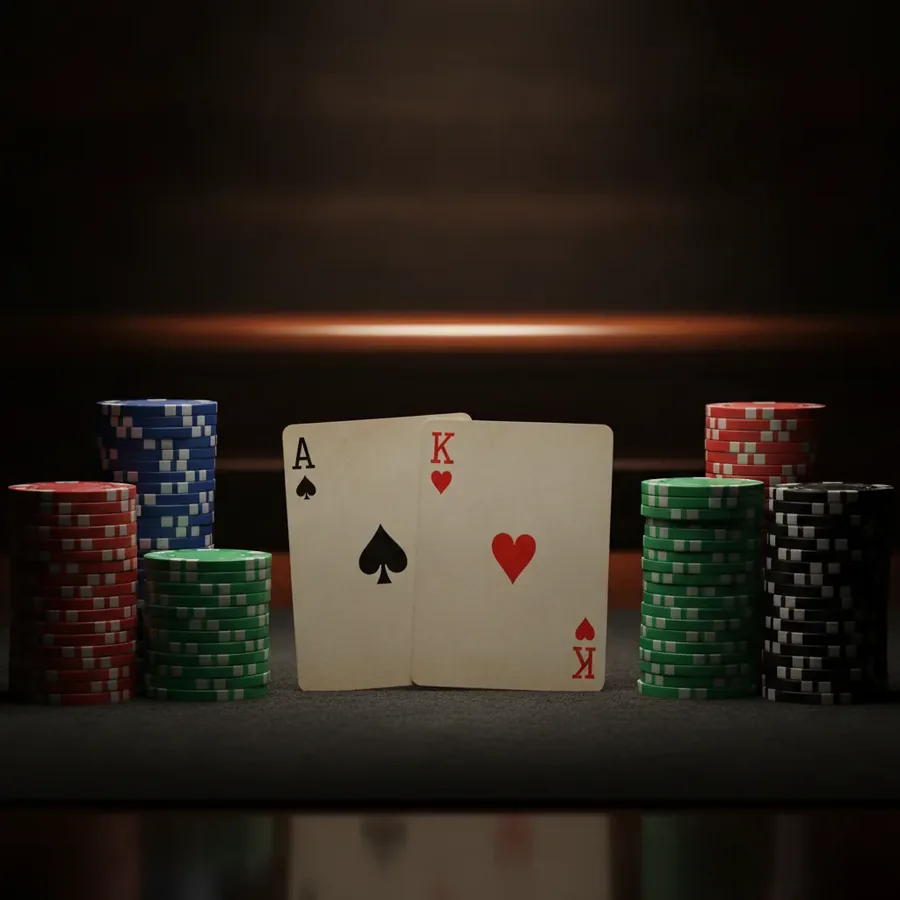
Six Card Charlie Pays Immediately with Six Cards
The Six Card Charlie rule, a favorable player option, dictates that any hand consisting of six cards without busting is an automatic win, regardless of the dealer's hand. This rule is a significant advantage, though not explicitly detailed with an RTP in the provided data for specific tables.
For context, standard rule adjustments like 'Dealer Hits Soft 17' (H17) can increase the house edge by 0.22 percentage points, highlighting the value of player-favorable rules.
Understanding such rules is crucial for players aiming for optimal strategy. For example, the Blackjack Liberal Vegas Strip variant, with its liberal rules and a 3:2 payout, offers a 99.72% RTP, making it a strong contender for players who value advantageous rule sets, even without the Six Card Charlie option.
Splitting Eights vs Standing on 16
A fundamental strategy in Blackjack involves splitting eights when dealt a pair, rather than standing on a total of 16. This strategic decision is informed by probability and aims to improve the player's chances of winning by creating two potentially stronger hands.
The decision to split eights is generally superior to playing a hard 16, which has a low probability of improving without busting. In contrast, splitting eights offers a better statistical outcome, particularly when compared to the negative impact of rule variations such as the dealer hitting soft 17 (H17), which adds 0.22 percentage points to the house edge.
Choosing to split eights is a critical tactical move that can significantly influence the game's outcome. For instance, Blackjack games with a 3:2 payout offer a superior RTP of 99.72% under liberal conditions, making strategic plays like splitting eights more impactful than on tables with less favorable 6:5 payouts.
Double Down after Split: which tables allow it
The option to 'Double Down After Split' (DAS) is a valuable player-friendly rule that enhances the potential returns of a hand. Not all Blackjack variants permit this action, making it a key differentiator when selecting a table.
Tables such as 'Blackjack 6 Decks, S17, DAS, DOA, Auszahlung 3:2, Basisstrategie' explicitly include DAS, which improves the RTP by approximately 0.14 percentage points compared to tables without it. This rule allows players to double their bet after splitting a pair, provided they receive only one more card.
Players seeking to maximize their advantage should prioritize tables that permit DAS. For example, the Infinite Blackjack live table, while offering unlimited seats and side bets like '21+3' and 'Hot 3', has an RTP of 99.47% and its allowance for DAS can be a significant factor in its overall player value.
Statistics display saves the last 100 rounds
Some Blackjack variants feature a statistics display that meticulously records the outcomes of the last 100 rounds. This feature provides players with valuable insights into recent game performance and trends.
While the specific games offering this 100-round history are not detailed, this type of analytical tool is common in advanced digital implementations. For comparison, live dealer games like Evolution's Blackjack Party, while focused on entertainment with two presenters, typically do not offer such detailed historical round data.
Access to the last 100 rounds can aid players in assessing table volatility or confirming the effectiveness of their chosen strategy. For instance, understanding the impact of rules on RTP, such as Blackjack Liberal Vegas Strip's 99.72% RTP due to liberal rules, becomes more tangible with historical round data.
Blackjack variants at a glance
| Variant | Payout | House edge | Rule | Bet range |
|---|---|---|---|---|
| Blackjack Auszahlung 6:5 statt 3:2 (6 Decks) | 98.15% | 1.85% | Ersatz von 3:2 durch 6:5 fügt exakt +1.39 Prozentpunkte zum Vorteil des Casinos hinzu – stärker als jede andere Regeländerung. Bei $10 Einsatz zahlt Blackjack $12 statt $15. | Blackjack 6:5, Gewinn 1:1 |
| Blackjack 6 Decks, S17, DAS, DOA, Auszahlung 3:2, Basisstrategie | 99.54% | 0.46% | Dealer steht auf Soft 17; Verdopplung auf jeder Zweierkarte; Verdopplung nach Split erlaubt; keine Aufgabe. Basisstrategie ist für diesen Wert zwingend | Blackjack 3:2, normaler Gewinn 1:1, Insurance 2:1 |
| Blackjack Ein Deck, klassische Regeln, 3:2 | 99.85% | 0.15% | Weniger Decks = niedrigerer Vorteil; ein Deck gibt ca. −0.48 Prozentpunkte gegenüber 8 Decks. Oft durch 6:5 Auszahlung kompensiert. | Blackjack 3:2, Gewinn 1:1 |
| Blackjack Liberal Vegas Strip (liberale Regeln, 3:2) | 99.72% | 0.28% | Günstigste Regelkombination: S17 + DAS + Resplit + Late Surrender. Standardabweichung 1,15 | Blackjack 3:2, Gewinn 1:1 |
| Blackjack Surrender (Late Surrender) – Regel-Effekt | n.a. (Regel-Modifikator) | −0.08 Prozentpunkte | Spieler gibt Hand nach Dealer-Blackjack-Prüfung auf, verliert die Hälfte des Einsatzes. Verbessert RTP um ca. 0.08 Prozentpunkte. Early Surrender ist wesentlich wertvoller (bis −0.6 Prozentpunkte), aber extrem selten. | Rückzahlung 50% des Einsatzes |
| Blackjack Split / Double / H17 – Regel-Effekte | n.a. (Regel-Modifikatoren) | H17 +0.22 Prozentpunkte; RSA −0.08 Prozentpunkte; DAS −0.14 Prozentpunkte | Dealer Hits Soft 17 verschlechtert RTP um 0.22 Prozentpunkte; Resplit Aces verbessert um 0.08 Prozentpunkte; Double After Split verbessert um ca. 0.14 Prozentpunkte; 6 Decks statt 8 – ca. 0.02 Prozentpunkte. | Double – Einsatz ×2 mit einer Karte; Split – bis 4 Hände; Ass-Split meist mit einer Karte. |
Seat change at the Live Table in 20 seconds
Quantum Blackjack Plus Live, offered by Playtech, allows for seat changes within 20 seconds, a duration significantly faster than traditional physical casino environments. This efficiency is crucial for players who may wish to switch tables or games during a live session. The speed ensures minimal disruption to gameplay and maintains player engagement.
Infinite Blackjack, from Evolution, also facilitates dynamic seat availability for an unlimited number of players, though specific seat change times are not detailed. This design ensures that all players can join the action without waiting for a physical seat to become vacant. The platform aims for a fluid player experience.
The speed of seat changes directly impacts player eligibility for specific rounds. A 20-second transition period means a player could potentially miss one round of betting if they are too slow to rejoin. This contrasts with games offering fixed seating, where participation is continuous once seated.
Card Counting at Shuffle Master Table: why it fails
Shuffle Master tables often employ continuous shuffling machines, which make traditional card counting strategies ineffective. These machines reintroduce cards back into play immediately after they are dealt, disrupting the sequential nature of card distribution. This prevents the accumulation of advantage-creating card counts.
The fundamental principle of card counting relies on tracking the ratio of high-value cards to low-value cards remaining in the shoe. When a continuous shuffling machine is used, this ratio is constantly reset, effectively eliminating the statistical advantage a card counter seeks. This technical detail is critical for understanding game mechanics.
Blackjack games with standard 6-8 deck shoes, such as Blackjack Insurance, can be susceptible to card counting under specific conditions, unlike Shuffle Master variants. However, without the ability to track remaining cards accurately, strategies like basic strategy adjustments based on card inventory become moot.
Blackjack Party runs with two hosts
Blackjack Party, a live dealer game from Evolution, features a distinct atmosphere due to its operation with two hosts. This setup is designed to enhance player interaction and create a more social gaming environment. The presence of dual hosts allows for more dynamic conversation and engagement with participants.
The entertainment value of Blackjack Party is amplified by its hosts, who maintain a party-like atmosphere throughout the gameplay. While specific RTPs are not detailed for this variant, the focus is on the interactive experience. This contrasts with games prioritizing pure statistical advantage, such as Blackjack Ein Deck with its 99.85% RTP.
The engaging presentation style of the two hosts can influence player perception, though it does not alter the underlying game mechanics or payouts. Bets range from 1.00 EUR to 1,000 EUR, allowing a broad spectrum of players to participate in this lively setting.
Latency under 2 seconds at the live table
Live tables at this establishment aim for latency under 2 seconds, ensuring a fluid and responsive gameplay experience for all participants. This minimal delay is critical for live dealer games, allowing players to place bets and react in near real-time. It directly impacts the perceived speed of the game.
A latency of under 2 seconds is significantly faster than the typical 3-5 second delays sometimes experienced in online gaming environments. This technical specification ensures that games like Quantum Blackjack Plus Live, with its 99.57% RTP at optimal strategy, remain highly playable without frustrating interruptions.
Low latency is particularly important for side bets such as those offered in Infinite Blackjack, where timing can be crucial. Players have sufficient time to consider and place these additional wagers, such as Any Pair or 21+3, without feeling rushed or missing betting windows.
Side Bets don't count towards bonus turnover
Side bets placed on live dealer games, including those in Infinite Blackjack, do not contribute to the wagering requirements of the welcome bonus. The welcome bonus offers 300% up to €2,000 plus 100 free spins, with a standard wagering requirement of x40, typically applied to slots at 100% and table games at 10%.
Bets placed on side wagers like 'Any Pair', '21+3', 'Hot 3', or 'Bust It' are excluded from bonus turnover calculations. This means that any funds wagered on these specific betting options will not reduce the total amount needed to be wagered to withdraw bonus winnings. Only main game bets count.
For example, if a player wagers on 'Hot 3' in Infinite Blackjack, that wager will not count towards the 4,000 € turnover required for a 100 € bonus (100 € x 40). Players aiming to clear bonus requirements should focus their wagers on the main blackjack hand, which contributes 10% to the turnover.
Blackjack Contributes Only 10 Percent to Wagering
Wagering requirements for bonuses indicate a game's contribution percentage, with table games, including Blackjack, contributing 10 percent. This means for every €100 wagered on Blackjack, only €10 counts towards fulfilling the bonus turnover requirement. Slots, in contrast, contribute 100 percent to wagering.
A welcome bonus of 300% up to €2,000 plus 100 free spins necessitates significant wagering. If a player claims the maximum €2,000 bonus, a typical wagering requirement of x40 would necessitate €80,000 in total bets. With a 10% contribution, only €8,000 of Blackjack wagers would count.
Players aiming to clear bonus wagering requirements should note the lower contribution rate for Blackjack. This effectively means that to meet the same wagering target, a player must place ten times the amount of bets on Blackjack compared to slots. This impacts the speed at which bonus funds become withdrawable.
Unlimited seats via a split dealer hand
Infinite Blackjack, a live dealer variant, offers an unlimited number of seats at the table by dealing a single initial hand to all players. Each player then makes their own decisions independently, regardless of what other players choose to do. This eliminates the traditional seven-seat limitation found in many physical and online blackjack games.
This format accommodates any number of players simultaneously, with bet ranges from €1 to €5,000 per hand. The game is provided by Evolution, a prominent developer in the live casino space known for its innovative table game formats. The core gameplay remains blackjack, but the player capacity is significantly expanded.
The advantage of unlimited seats is the removal of waiting times, a common issue at popular live blackjack tables with fixed seating. Players can join and play a hand without delay, enhancing the overall gaming session efficiency. This is particularly beneficial during peak gaming hours.
Infinite Blackjack vs Classic Seven-Seat Table
Infinite Blackjack's core differentiation lies in its unlimited player capacity, as opposed to the classic seven-seat blackjack tables. While a traditional table limits seven players actively playing a hand, Infinite Blackjack allows for an endless stream of participants by providing each player with their own independent hand after the initial deal.
The RTP for Infinite Blackjack is listed at 99.47% with optimal strategy. This is comparable to some high-quality classic blackjack variants, such as Blackjack 6 Decks with an RTP of 99.54% or Blackjack Liberal Vegas Strip at 99.72%. However, the player experience is fundamentally altered by the seating.
Side bets are a feature in Infinite Blackjack, including Any Pair, 21+3, Hot 3, and Bust It, offering additional wagering opportunities beyond the main hand. These side bets carry different house edges and payout structures, adding another layer of complexity to the game compared to a basic seven-seat game which may or may not offer such options.
When does the table max bet apply?
The table maximum bet is a critical limit for high rollers and casual players alike. For Infinite Blackjack and Quantum Blackjack Plus Live, the maximum bet allowed per hand is €5,000. This limit applies to each individual hand played at the table, regardless of the number of players participating.
This €5,000 maximum bet is a crucial parameter for bankroll management and strategy. It dictates the upper boundary of a single wager, influencing potential returns and the risk associated with each hand. The house edge and RTP figures are calculated based on standard betting patterns within these limits.
It is important to note that the €1,000 maximum bet for Blackjack Party suggests a different tier of play or a potentially distinct set of rules or provider influence compared to the €5,000 limit games. Players should verify the specific maximum bet for the table they intend to join before placing their wager.
Insurance vs Even Money on Own Blackjack
Blackjack Insurance is a side bet offered when the dealer's upcard is an Ace, allowing players to wager up to 50% of their main bet against the dealer having a blackjack. This bet pays 2:1, but its RTP is a low 92.53%, with a significant house advantage of 7.47%.
Even money, on the other hand, refers to a payout of 1:1 for a player's own blackjack, as opposed to the standard 3:2 payout. While some blackjack variants offer 6:5 payouts for a blackjack, which significantly increases the house edge by 1.39%, 'even money' typically relates to a player's natural blackjack payout.
The decision to take insurance is generally advised against by basic strategy, except in specific card-counting scenarios where the true count is high. Taking insurance, therefore, substantially lowers the overall return to player compared to foregoing the side bet and focusing on optimal play of the main hand.
Contact
Live - online chat
Banking









Providers












Neospin Casino 2026